The quote “Never let a good crisis go to waste” is often attributed to Winston Churchill, but scammers have adapted it to their line of work. As we’ve warned many times before, they will take advantage of news headlines to lend credibility to their fraudulent tricks.
Currently, new government tariffs are making headlines – and their creating new opportunities for cybercriminals. If you’ve recently received a message asking you to pay a customs or tariff fee for a package, you’re not alone. Scammers are using the confusion around international trade and tariff rules to launch a new wave of phishing attacks, fake websites, and fraudulent payment requests.
Why Tariffs Are the Perfect Cover for Scams

Tariffs are essentially taxes on goods imported from other countries. Businesses often pass those costs on to consumers through price increases, and in some cases, customers might see added charges at checkout, or even fees charged after their purchase.
With tariff rules changing almost daily and not many people fully understanding how they work, scammers are finding it to be the perfect opportunity to cash in. Criminals are impersonating delivery companies, online retailers, and even government agencies to send fake “tariff payment” requests by text or email. They’re betting that confused consumers won’t think twice before clicking “pay.”
How These Tariff Scams Work

Cybersecurity researchers have already found hundreds of newly registered fake websites designed to look like official tariff portals. These scam sites trick users into paying fake customs or import fees or entering sensitive information like credit card numbers or other payment information.
In some cases, people receive a message claiming that a package is being held up until a “tariff fee” is paid. The message may include a link to a payment site or even look like it’s coming from a legitimate source like the government or a popular shipping carrier like FedEx, UPS, or DHL.
Other scams offer fake “tariff exemptions,” vouchers, or limited-time offers to trick people into entering their personal information. Like all classic social engineering tactics, the goal is to get the victim to “act fast” without stopping to consider if it’s a scam.
Sometimes the Tariff Fees Are Real! So How Can You Tell?

To make the issue even more complicated, sometimes consumers do get legitimate tariff-related charges. For example:
- Some shipping carriers (like FedEx or UPS) act as the importer on your behalf. If they didn’t collect customs fees when you ordered the product, they might send you a follow-up bill.
- U.S. Customs and Border Protection may also require a small processing fee before releasing certain imported goods.
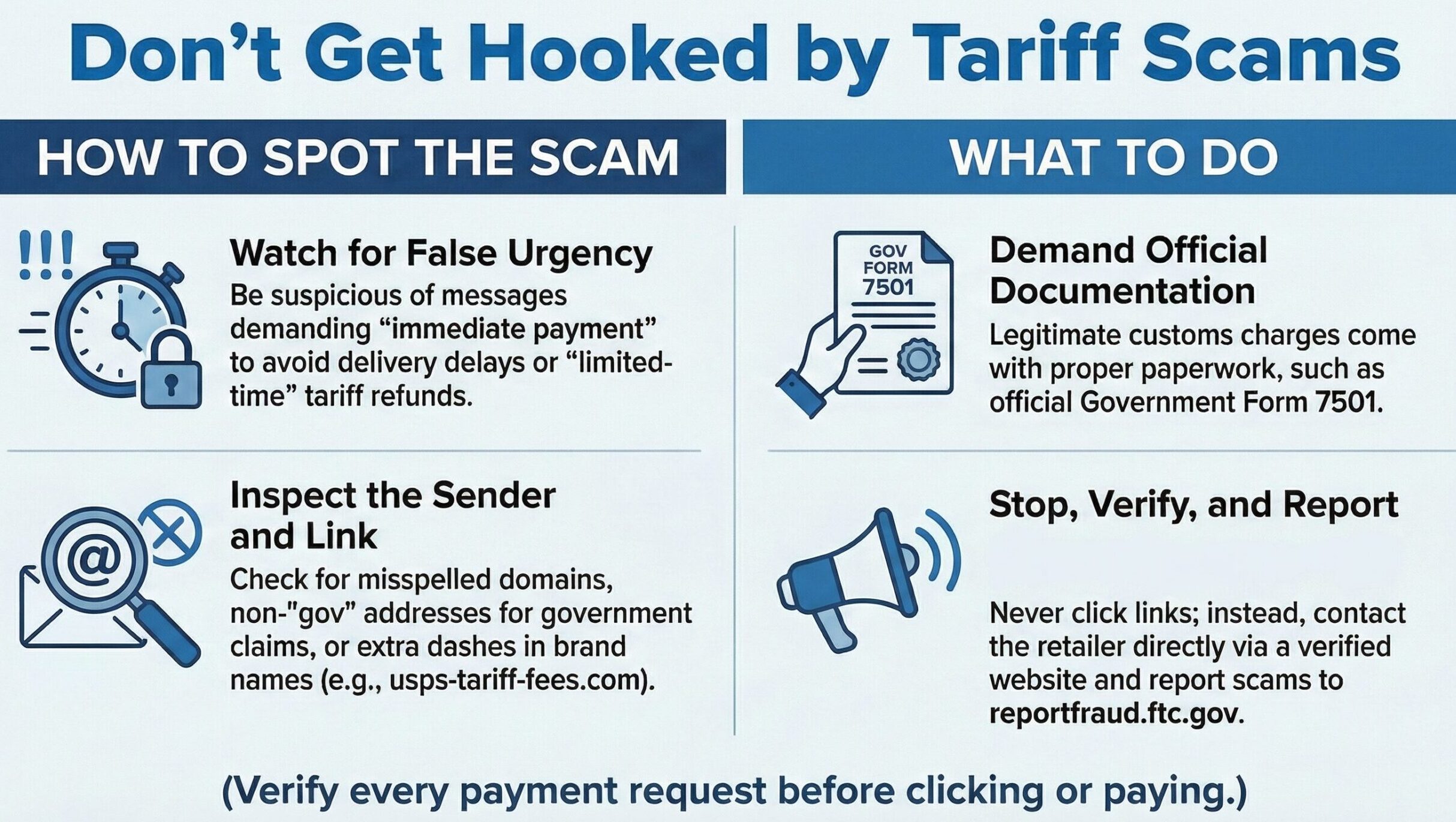
These situations are rare, but they do happen. The key difference is that real charges will come with proper documentation, such as Form 7501, an official government form showing the import details.
3 Signs to Spot a Tariff Scam

1. Unsolicited and Urgent Payment Requests
If you get a text or email asking you to pay a customs or tariff fee right away to release a package or avoid penalties, be suspicious. Scammers often use urgent language like:
- “Pay now to avoid delivery delays”
- “Customs exemption expiring soon”
- “You’ve qualified for a limited time tariff refund—act fast!”
Legitimate retailers or agencies don’t pressure people into quick decisions. If it feels pushy or too good to be true, it probably is.
2. Suspicious Links or Email Addresses
Always check the sender’s email address and the website carefully. Scam messages often contain misspelled, general, or strange-looking domains. For example:
- A message claiming to be from the U.S. government, but coming from an site that’s not a “.gov” web address
- An email from a general web domain that tries to look official, such as “secure.net”
- A link that looks almost like a real brand’s website but has extra words, dashes, or typos, such as usps-tariff-fees.com
If you’re in doubt, check who owns the website and when it was registered. If it was just registered recently or doesn’t match the company’s real information, it’s probably a site set up by scammers.
3. No Clear Explanation or Contact Info
Legitimate sellers will clearly explain any added fees and give you a way to ask questions. If the message doesn’t include details about what the charge is for—or doesn’t offer any real customer service contact info—it’s probably fake. But beware of messages that only provide a “customer service” phone number, as many scammers have turned to phishing by baiting you into calling them.
What to Do If You Get a Suspicious Tariff Message

- Don’t click on links or open attachments unless you’re sure the message is legitimate.
- Contact the retailer or delivery company directly using a verified phone number or website—not the one in the message.
- Report the scam to the FTC at reportfraud.ftc.gov or to your state’s consumer protection office.
Stay Alert to Stay One Step Ahead of Scammers
As international trade policies and tariffs continue to shift, scammers will keep taking advantage of the confusion. And when the next big change makes headlines, scammers will be ready to change their messages to adapt. That means you need to stay sharp and double-check any messages about payments, fees, or packages. You don’t need to be an expert to protect yourself, just remember to slow down, verify before you pay, and never share personal or financial info unless you’re sure it’s legitimate. Many businesses nowadays will understand your skepticism and will be willing to prove their validity.